How Long Do Painted Cabinets Last? Durability Guide
Learn how long professionally painted cabinets last and what affects their durability. Tips for maintaining your cabinet finish for years.
How Long Do Painted Cabinets Last? Durability Guide
One of the most frequent questions we hear during cabinet painting consultations in Ahwatukee and Chandler is simply, “How long will this actually last?”
It is a fair question because you are investing in the heart of your home.
We find that most homeowners are surprised to learn that the longevity of their cabinets has less to do with the color they choose and everything to do with the chemical makeup of the coating itself.
The following guide breaks down the real lifespan of painted cabinets, the specific environmental challenges here in the Valley, and how to maintain that factory-fresh look for a decade or more.
Expected Lifespan of Painted Cabinets
The durability of your cabinets depends entirely on whether they were painted with standard architectural wall paint or finished with an industrial wood coating.
Professional Industrial Finishes (2K Polyurethane)
10-15+ years
We use 2K (two-component) polyurethane coatings that are specifically engineered for cabinetry.
These finishes contain a hardener that creates a chemical bond much stronger than standard paint.
You can expect these coatings to resist chipping, moisture, and skin oils for over a decade.
Standard “Pro” Paint (1K Enamel)
5-7 years
Many painters use high-quality trim enamels (like Sherwin Williams Emerald Urethane or Benjamin Moore Advance).
These are excellent single-component products but are softer than 2K finishes.
They will eventually show wear around knobs and high-traffic drawers after several years of daily use.
DIY Latex Application
2-3 years
Standard latex wall paint is never suitable for cabinetry.
It remains too soft and “gummy,” leading to peeling behind handles and chipping on doors within the first 24 months.
Factors That Determine Durability
1. Preparation Quality (The Foundation)
The #1 factor in coating failure.
We approach preparation as a multi-step chemical and mechanical process.
Proper prep must include:
- Degreasing: Removing invisible kitchen oils using industrial surfactants (like TSP substitutes) so the primer bonds to the wood, not the grease.
- Sanding: Using 220-320 grit abrasives to “degloss” the old finish and create microscopic scratches (tooth) for adhesion.
- Grain Filling: On open-grain woods like oak, we fill the grain to prevent the texture from telegraphing through the new finish.
- Bonding Primer: Using shellac or oil-based bonding primers designed to stick to difficult surfaces.
The Insider Truth: If a painter promises a “no sanding” liquid deglosser system, walk away. Mechanical sanding is non-negotiable for long-term adhesion.
2. Coating Chemistry and Testing
Not all paints are created equal.
The Kitchen Cabinet Manufacturers Association (KCMA) sets the A161.1 standard for durability.
We select coatings that pass these rigorous KCMA tests:
- Chemical Resistance: Exposure to mustard, vinegar, lemon juice, orange juice, grape juice, coffee, and 100-proof alcohol for 24 hours without staining.
- Temperature Cycling: Withstanding rapid changes from -5°F to 120°F (crucial for Arizona homes).
- Humidity Resistance: 24 hours of exposure to 120°F at 70% humidity.
| Coating Type | Hardness (KCMA Rated) | Chemical Resistance | Best Use |
|---|---|---|---|
| Standard Latex | Low | Poor | Walls only |
| Acrylic Enamel | Medium | Fair | Trim & Doors |
| 2K Polyurethane | High (Industrial) | Excellent | Kitchen Cabinets |
3. Application Method
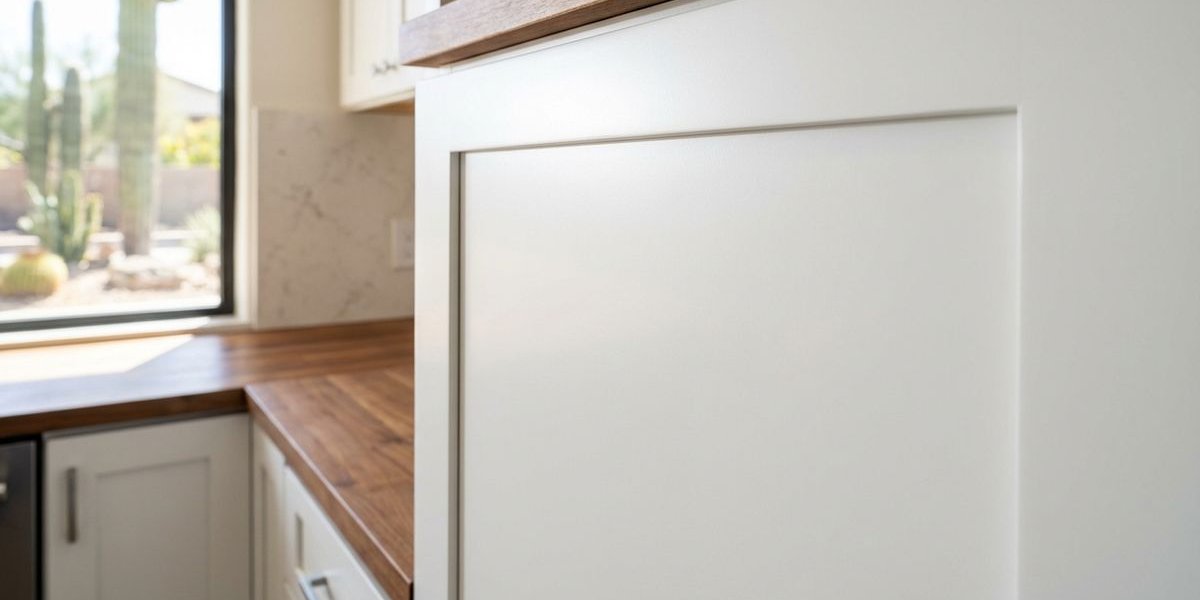
Professional Spray (HVLP/AAA) We utilize High Volume Low Pressure (HVLP) or Air-Assisted Airless (AAA) sprayers.
This equipment atomizes the coating into a fine mist.
The result is a flawlessly smooth surface that looks like it came from a factory, not a paint can.
Brush and Roller Even the best rollers leave a “stipple” texture.
This texture can trap dirt and grease over time, making the cabinets harder to clean and more prone to wearing down on the high spots.
The “Phoenix Factor”: Climate Impact
Homeowners in the Metro-Phoenix area face a unique challenge that affects cabinet longevity: Extreme Wood Movement.
Our climate swings from 110°F dry heat in June to humid monsoon storms in August.
The Dry/Wet Cycle
Wood is hygroscopic, meaning it absorbs and releases moisture from the air.
- Summer Dryness: Wood shrinks, causing panel gaps to open.
- Monsoon Humidity: Wood absorbs moisture and expands.
Preventing Cracks
If a coating is too brittle, this constant movement will cause it to crack at the joints (where the door style meets the rail).
We use coatings with higher “elasticity” or flex.
This allows the finish to stretch and move with the wood as it expands and contracts, preventing those unsightly hairline cracks common in cheaper paint jobs.
Curing Time: The Wait is Critical
New cabinet coatings need time to reach their full chemical hardness.
2K Polyurethane (Our Standard)
- 24 Hours: Safe to handle and install.
- 7 Days: 90% cured and ready for normal use.
- 14 Days: Fully chemically cured.
Standard Enamels
- 7 Days: Surface dry but still soft.
- 30 Days: Susceptible to fingernail scratches.
- 30-45 Days: Fully cured.
Pro Tip: Treat your cabinets like fine china for the first two weeks. Avoid scrubbing them or installing heavy hardware until the cure cycle is complete.
Common Causes of Premature Failure
1. The “Magic Eraser” Mistake
Melamine sponges (Magic Erasers) act like fine sandpaper.
They act like 3000-grit sandpaper and will slowly sand off the protective sheen of your cabinets.
Once that sheen is gone, the paint becomes porous and attracts dirt rapidly.
2. Moisture Accumulation
Cabinet doors directly below the sink and next to the dishwasher fail first.
Steam from a dishwasher vent or water dripping from wet hands will degrade the coating over time.
We recommend drying these high-risk areas immediately after washing dishes.
3. Ammonia and Vinegar
Many common cleaners damage modern coatings.
- Ammonia (Windex): Softens acrylic latex finishes.
- Vinegar: The acid eats away at the clear coat or enamel over time, leaving a dull, cloudy haze.
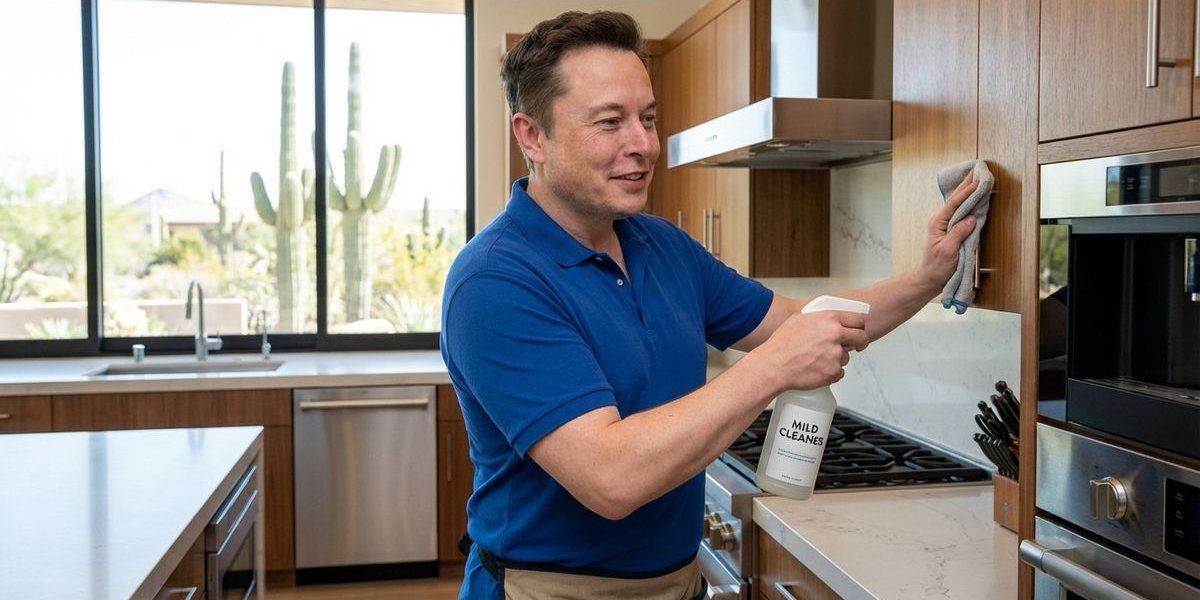
Maintenance Guide for Arizona Homeowners
Approved Cleaning List
Keep it simple to protect your warranty and your finish.
- Everyday Cleaner: A mixture of warm water and a few drops of mild dish soap (like blue Dawn).
- Application: Use a microfiber cloth only. Dampen it slightly (do not soak).
- Technique: Wipe with the grain, then immediately dry with a fresh microfiber cloth.
Adjusting for the Desert
- Humidify: Maintaining indoor humidity between 30-40% helps prevent extreme wood shrinkage.
- Tighten Hardware: Wood movement can loosen screw holes. Check your knobs and hinges once a year to ensure they are tight, preventing the hardware from spinning and scratching the paint.
Signs Your Cabinets Need Attention
Minor Touch-Ups
- Small nicks on the edges of trash pull-outs.
- Light wear around the most-used knobs.
We provide a small touch-up kit with every project for these inevitable life moments.
Time for Professional Refinishing
- Delamination: The paint is peeling off in sheets (a sign of poor prep).
- Orange Peel: The texture is rough and trapping grease.
- Joint Cracking: Large gaps opening up where the door frames meet.
Get Professional Cabinet Painting
You do not need to replace your cabinets to get a brand-new kitchen.
Our professional refinishing process gives you the durability of a factory finish at a fraction of the cost of renovation.
Contact John Claude Painting AZ today for a consultation to see how we can transform your home.
John Claude Painting Team
Published November 1, 2025