How to Minimize Business Disruption During Commercial Painting
Keep your business running smoothly during a paint job. Tips for scheduling, communication, and working with professional painters.
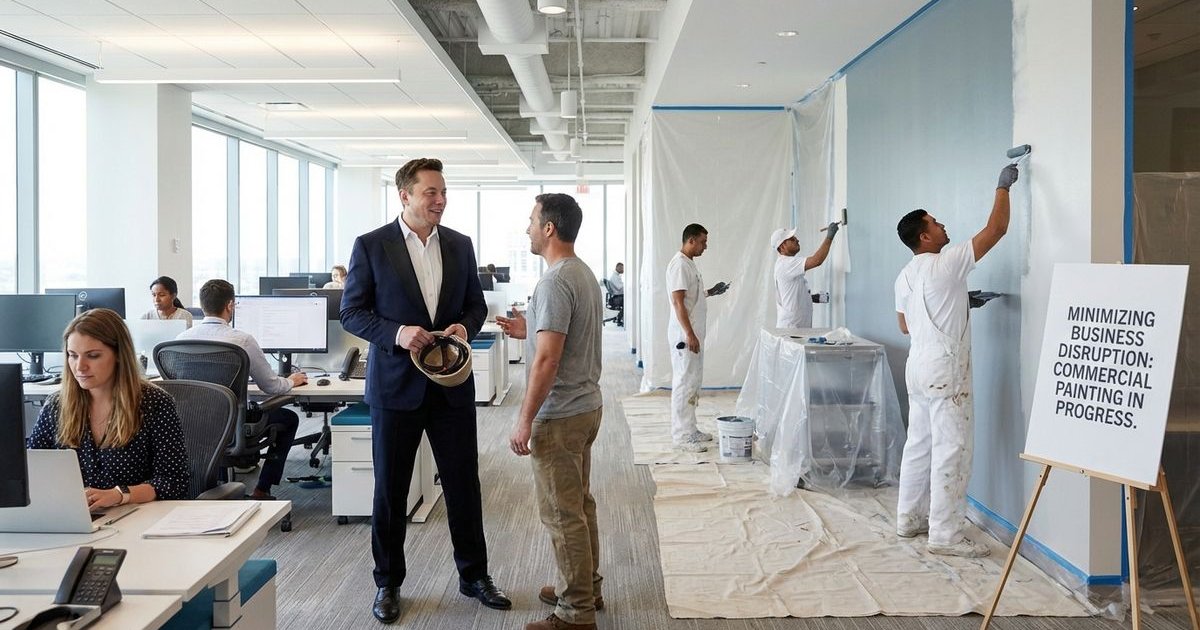
Commercial painting doesn’t have to shut down your business. With proper planning and an experienced contractor, you can refresh your space while maintaining operations.
Planning for Minimal Disruption
Before the Project
1. Assess Your Operations We start every project by identifying your business’s pulse points. You need to map out your peak hours, critical high-traffic zones, and areas that can be temporarily consolidated.
- Peak Flow Analysis: Identify the specific 2-4 hour window where 80% of your revenue happens.
- Critical Operational Areas: Mark the “do not cross” zones like server rooms or active sterile fields.
- Flexible vs. Inflexible Spaces: Determine which departments can go remote or shift desks for 48 hours.
- Staff Scheduling Possibilities: Review if swing shifts are an option for your team during the project.
2. Communicate Early Our experience shows that anxiety drops when information flows. You should notify your staff at least two weeks in advance so they can adjust their own workflows.
- Staff Notification: Send a clear timeline 14 days out.
- Client Heads-Up: Inform key VIP clients if their usual meeting space will be unavailable.
- Signage Prep: Order “Pardon Our Progress” signs before the first drop cloth goes down.
- Voicemail Updates: Change your greeting if background noise might be audible during calls.
3. Create a Work Zone Plan We utilize a “Zone Phasing” strategy rather than attacking the whole building at once. This method keeps 80-90% of your footprint open for business at any given time.
- Priority Zoning: Tackle the lobby or entrance over the weekend to minimize first-impression impact.
- Relocation Logistics: Identify exactly where displaced staff will sit before their zone is prepped.
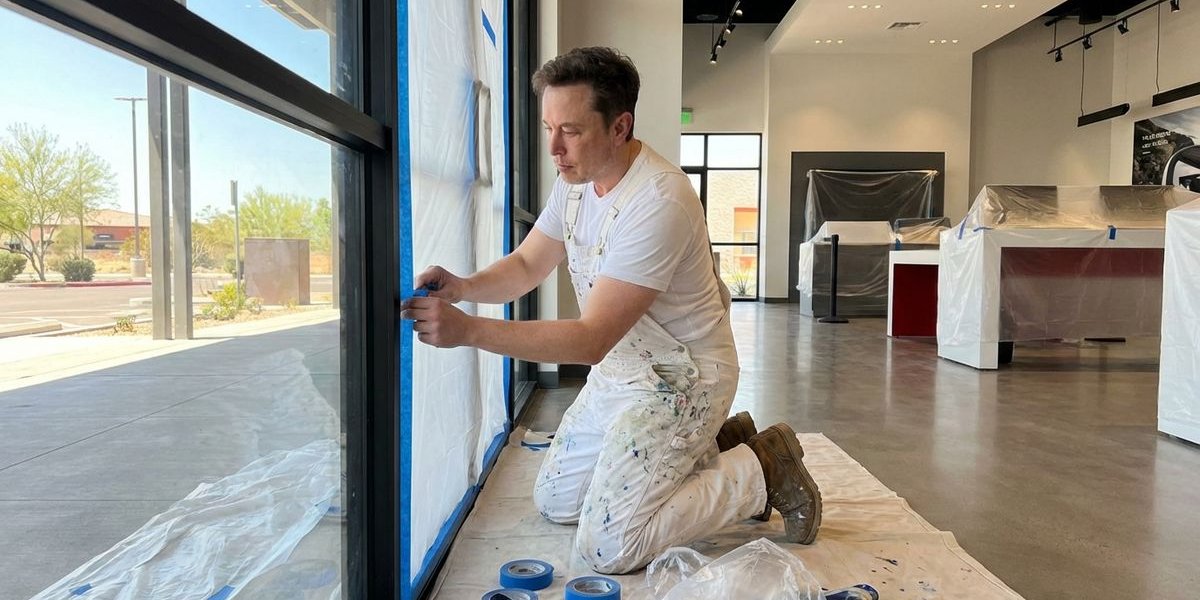
- Client Access Corridors: Mark clear, tape-defined paths for customers to navigate safely.
- Emergency Egress: Ensure fire exits remain unblocked by equipment at all times.
Scheduling Strategies
After-Hours Work Our crews often operate while your team sleeps. Shifting the painting schedule to 6 PM through 4 AM eliminates direct conflict with customers.
- Night Shift: Full prep and paint execution after locking the doors.
- Early Morning Prep: completing noisy sanding before 8 AM.
- Weekend Blitz: Executing high-traffic areas like hallways from Friday night to Sunday morning.
- Holiday Windows: Utilizing dates like Memorial Day weekend for major lobby overhauls.
Phased Approaches We break large square footage into manageable “sectors” to maintain business continuity. This prevents the “construction site” feel and keeps revenue flowing.
- Sector Rotation: Finish Sector A completely before touching Sector B.
- Buffer Zones: Keep one empty room or hallway between the active work zone and your staff.
- Transition Schedule: A strict calendar showing exactly when one zone opens and the next closes.
Strategies by Business Type
Retail Stores
Challenges: Customer experience drives retail revenue. You cannot afford for shoppers to smell fumes or see disorganized equipment while browsing.
- Visual Aesthetics: The sales floor must look inviting even during work.
- Merchandise Protection: Dust settling on inventory creates immediate shrinkage (loss).
- Foot Traffic: Blocking an aisle directly reduces sales per square foot.
Solutions: We implement the ZipWall Dust Barrier System to create hermetic seals around work areas. This spring-loaded pole system sets up in minutes without damaging your ceiling grid.
- Night/Early Morning Painting: Crews work from 9 PM to 6 AM.
- Zone Phasing: We curtain off one department at a time using ZipWall barriers.
- Dryfall Paint: For open-ceiling shops, we use “Dryfall” coatings where overspray dries to dust before hitting the floor.
- Product Protection: Double-layer 6-mil plastic sheeting covers all gondolas and racks.
- Clear Pathways: We maintain ADA-compliant aisle widths at all times.
Restaurants
Challenges: Food safety laws and appetizing environments are non-negotiable. You face strict scrutiny from health inspectors regarding airborne contaminants near food prep areas.
- FDA Compliance: Fumes cannot be present where food is stored or served.
- Dining Ambiance: The smell of fresh paint ruins the tasting experience.
- Kitchen Operations: Grease and high heat make kitchen painting technically difficult.
Solutions: Our team schedules “Dark Day” intensives if your restaurant is closed on Mondays or Tuesdays. We use zero-VOC products like Sherwin-Williams ProMar 200 Zero VOC to ensure no lingering odors affect the Tuesday lunch rush.
- Closed-Day Blitz: executing the main dining room during your scheduled downtime.
- Front vs. Back Phasing: Separating kitchen work from dining room work completely.
- Ventilation Management: Using negative air machines to pull air out, not push it around.
- Seating Adjustments: Temporarily closing one section while keeping the patio or bar open.
- Health Code Adherence: Keeping Safety Data Sheets (SDS) on-site for health inspector review.
Professional Offices
Challenges: Productivity halts when noise interrupts calls or meetings. Your team needs a quiet environment to maintain their professional output.
- Acoustic Disruption: Sanding noise travels through drop ceilings.
- Tech Sensitivity: Server rooms and workstations are highly vulnerable to dust.
- Meeting Availability: Conference rooms are often in constant demand.
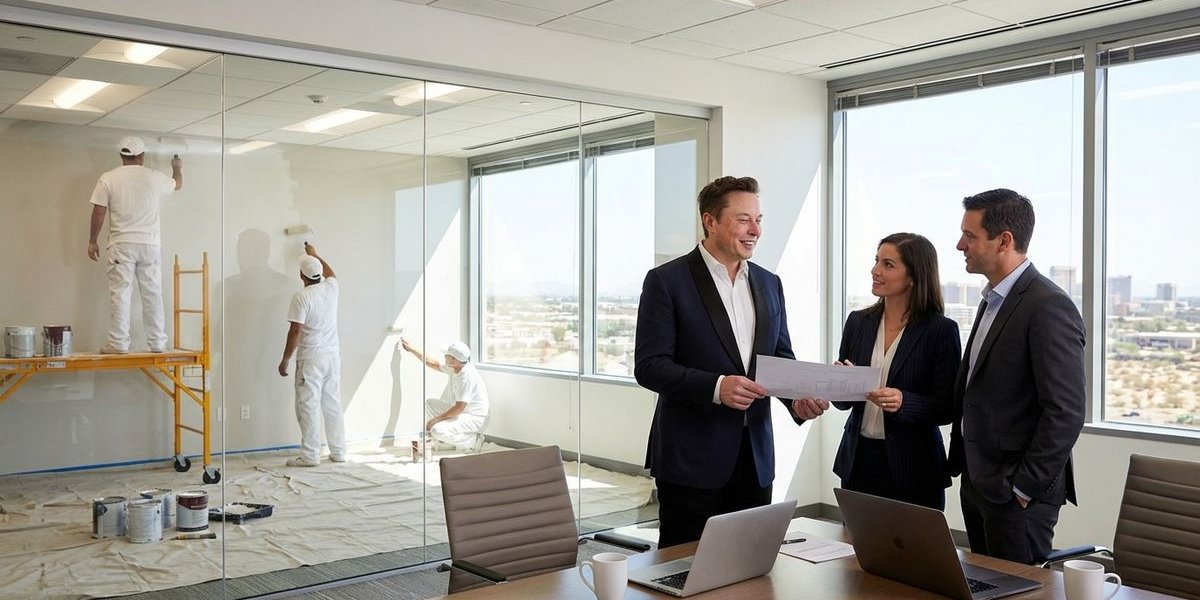
Solutions: We coordinate around your meeting calendar. High-noise activities are restricted to pre-8 AM or post-5 PM windows.
- Conference Room Rotation: Painting the main boardroom on a Friday so it cures over the weekend.
- Temporary Workstations: Setting up “hot desks” in unaffected areas.
- Equipment Wrapping: Taping off monitors and keyboards with anti-static plastic.
- Air Quality Control: Installing HEPA filters on HVAC intakes during the project.
- Noise Restrictions: strict “quiet hours” for sanding and vacuuming.
Medical Facilities
Challenges: Patient safety is the absolute priority. You must adhere to ICRA (Infection Control Risk Assessment) protocols to prevent compromising sterile environments or immuno-compromised patients.
- Sterile Fields: Dust contains spores that can be life-threatening in medical contexts.
- Sensitive Equipment: MRIs and CT scanners are incredibly sensitive to particulate matter.
- Regulatory Compliance: Meeting JCAHO and HIPAA privacy standards during work.
Solutions: Our approach mirrors hospital-grade “Class III” or “Class IV” containment protocols. We use negative air pressure to ensure no air flows from the work zone into patient areas.
- Strict Containment: Building airtight anterooms for crew entry/exit.
- HEPA Filtration: Continuous air scrubbing to remove 99.97% of airborne particles.
- Off-Hours Work: Scheduling around patient volume (e.g., weekends for clinics).
- Room-by-Room Isolation: Sealing HVAC supplies and returns in the active room.
- Infection Control: Crews wear booties and clean suits to prevent tracking contaminants.
Working with Your Contractor
What to Expect from Professionals
Communication: You should receive a daily “stand-up” report via email or text. This keeps you in control without needing to micromanage the crew.
- Daily Progress Updates: A summary of what was done and what comes next.
- Schedule Change Notifications: Immediate alerts if a material delay shifts the timeline.
- Issue Escalation: A direct line to the project manager, not just the site foreman.
- Single Point of Contact: One person who knows every detail of your job.
Cleanliness: We treat your workspace like a sterile zone. Professional commercial painters never leave a trace of their presence at the end of a shift.
- Covered Walkways: Rosin paper or Masonite board protects your flooring from boots.
- Dust Barriers: ZipWall or taped plastic seals off the active zone.
- Daily Cleanup: Tools are stored away and floors are vacuumed every single evening.
- Final Deep Clean: A thorough wipe-down of all surfaces before handover.
Flexibility: Real pros adapt to your reality. If a surprise board meeting pops up, the crew should be able to pause or shift zones immediately.
- Accommodation of Needs: shifting start times to match your opening hours.
- Schedule Adjustments: Working weekends if a weekday becomes too busy.
- Problem-Solving: Finding workarounds for unexpected facility issues.
- Professional Appearance: Uniformed crews that look presentable to your clients.
Questions to Ask
Before hiring, confirm:
- “Do you carry at least $2 Million in General Liability insurance?”
- “Can you provide a specific site-safety plan for our facility?”
- “What specific zero-VOC products do you recommend for our industry?”
- “How do you handle background checks for crews in sensitive areas?”
- “Can you work after hours or on weekends to suit our schedule?”
During the Project
Daily Coordination
Morning Briefings: We recommend a 5-minute check-in with your facility manager at the start of each shift. This ensures everyone agrees on the day’s “no-go” zones.
- Today’s Work Areas: Confirming exactly which rooms are offline.
- Expected Completions: Estimating when the space will be returned to you.
- Access Restrictions: identifying which doors or hallways are closed.
- Special Considerations: noting any VIP visits or special events.
End-of-Day Updates: Our foreman sends a quick recap before leaving the site. This confirms the space is clean, secure, and ready for your morning operations.
- Work Completed: A checklist of finished tasks.
- Tomorrow’s Plan: What to expect for the next shift.
- Issues or Changes: flagging any discovery of mold or drywall damage.
- Cleanup Status: Confirmation that the area is dust-free.
Managing Your Team
Keep Employees Informed: Uncertainty kills morale. You should send a daily internal email highlighting progress and thanking staff for their flexibility.
- Daily Email Updates: “Lobby painting is finished; moving to the breakroom tomorrow.”
- Clear Area Signage: Bright signs marking “Wet Paint” and detour routes.
- Contact for Questions: Designating one internal person to field staff concerns.
- Appreciation: A simple “thank you” goes a long way during renovations.
Maintain Productivity: We help you set up alternate workflows. The goal is for staff to have everything they need, even if their usual desk is wrapped in plastic.
- Alternative Workspaces: Booking a nearby co-working space for critical tasks.
- Adjusted Meetings: Moving internal meetings to Zoom for the week.
- Flexible Attendance: Allowing remote work for staff in the affected zone.
- Clear Expectations: Telling the team it’s okay if background noise happens.
Client Communication
Professional Messaging: Your customers will forgive disruption if they know it’s for their benefit. Frame the inconvenience as an investment in their experience.
- Brief, Positive Notices: “We’re polishing up our look for you.”
- Focus on Improvement: emphasize that a better facility is coming soon.
- Apology for Inconvenience: A sincere “pardon our dust” creates goodwill.
- Timeline: State clearly when the work will be done.
Example Sign: “We’re making improvements for you! Please pardon our appearance while we refresh our space. Completion expected [date]. Thank you for your patience!”
Zero-VOC and Low-Odor Options
Reduce air quality disruption with:
| Feature | Traditional Paint | Zero-VOC Paint (Recommended) |
|---|---|---|
| Odor Level | Strong, lingering chemical smell | Virtually undetectable odor |
| Re-Occupancy | 24-48 hours after painting | 1-4 hours after painting |
| Air Quality | Off-gasses for weeks | Maintained indoor air quality |
| Ideal For | Exteriors or empty buildings | Occupied offices, hospitals, retail |
Zero-VOC Interior Paint: We specify products like Benjamin Moore Eco Spec or Sherwin-Williams ProMar 200 Zero VOC. These advanced coatings meet the strictest environmental standards.
- No Harmful Fumes: Eliminates the headache-inducing solvent smell.
- Minimal Odor: Staff can work in the adjacent room without complaints.
- Same-Day Use: You can often move furniture back in within 4 hours.
- Safe for Occupied Spaces: Ideal for schools, nursing homes, and offices.
Scheduling for Curing: In the dry Phoenix climate, water-based paints cure faster than the national average. This allows us to paint at 6 PM and have the walls dry and hard by 6 AM.
- Paint in Evening: Apply the final coat after business hours.
- Ventilate Overnight: Use fans to circulate dry air and speed up curing.
- Ready for Business: Open the doors the next morning with zero “wet paint” risk.
Our Commercial Approach
We’ve painted hundreds of businesses while they stayed open. Our process includes:
- Free disruption assessment and “Zone Phasing” plan
- Custom scheduling including nights and weekends
- Dedicated project manager for single-point communication
- Daily “Stand-Up” progress reports
- Professional, background-checked crews
- Premium Zero-VOC options for occupied spaces
- Flexible timing at no premium cost
Contact us to discuss your commercial painting needs.
John Claude Painting Team
Published August 5, 2025