7 Warning Signs Your Phoenix Home Needs Exterior Painting
Don't wait until it's too late. Recognize the warning signs that your home's exterior paint is failing and needs professional attention.
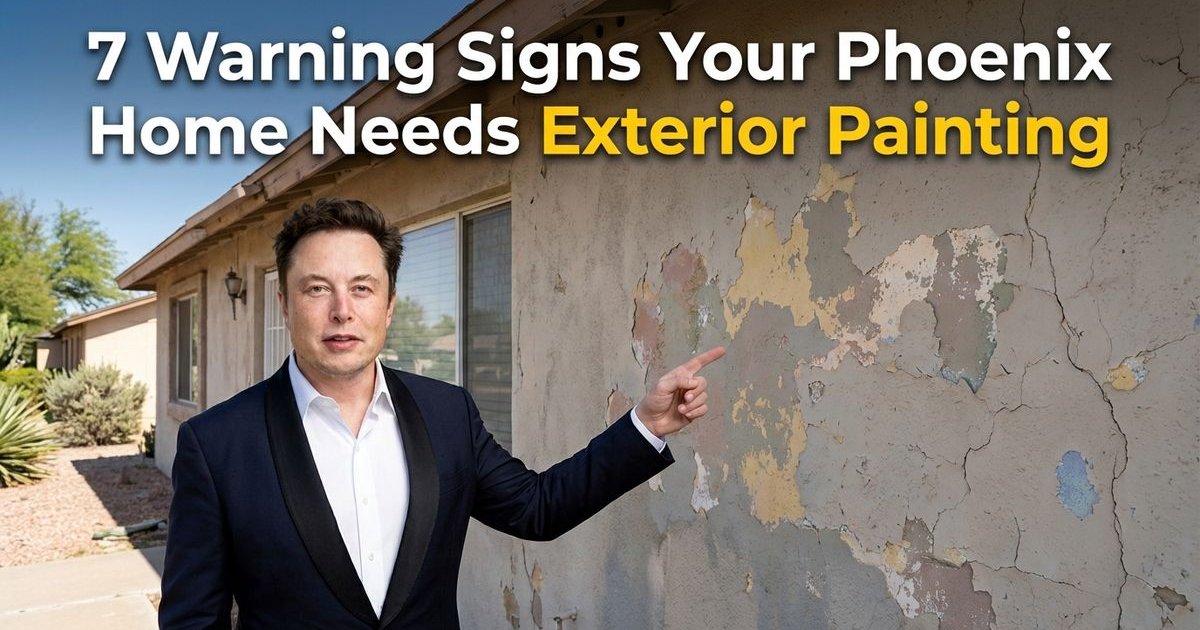
Arizona’s intense sun and temperature extremes are tough on exterior paint. Catching problems early can save you money and prevent damage to your home’s structure. Here are seven warning signs that it’s time to schedule exterior painting.
1. Fading and Discoloration
The most obvious sign of paint failure is noticeable fading, especially on south and west-facing walls that receive the most sun. If your once-vibrant paint color now looks washed out and dull, UV radiation has broken down the pigments.
What to look for:
- Uneven color across the same wall
- Significant difference between shaded and sun-exposed areas
- Color no longer matches original paint chips
2. Chalking
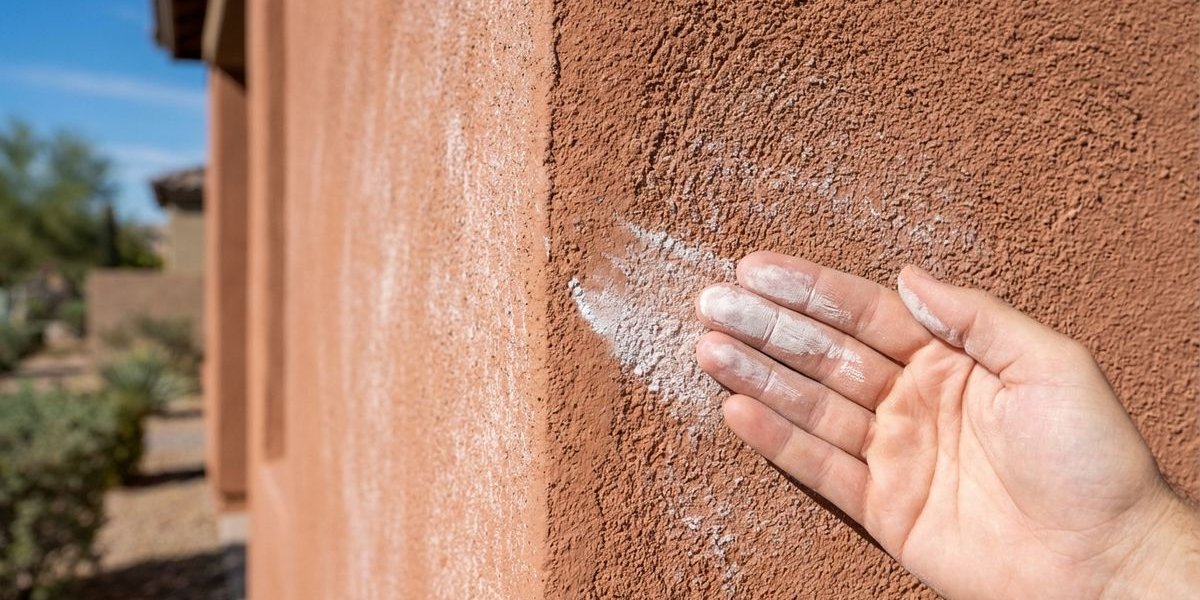
Rub your hand across your painted stucco. If it comes away with a powdery residue, that’s chalking—the paint is literally breaking down into powder. Some chalking is normal as paint ages, but excessive chalking means the paint is no longer protecting your home.
Test it: Press a dark cloth against the wall. Heavy white residue indicates significant chalking.
3. Peeling, Bubbling, or Blistering
These conditions indicate paint adhesion failure:
Peeling: Paint lifting and curling away from the surface Bubbling: Raised areas under the paint film Blistering: Small bubbles in the paint surface
In Arizona, these problems often result from:
- Painting over poorly prepared surfaces
- Moisture intrusion from damaged stucco
- Painting in extreme heat
Why it’s urgent: Exposed surfaces deteriorate rapidly in our climate.
4. Cracking and Flaking
Look for:
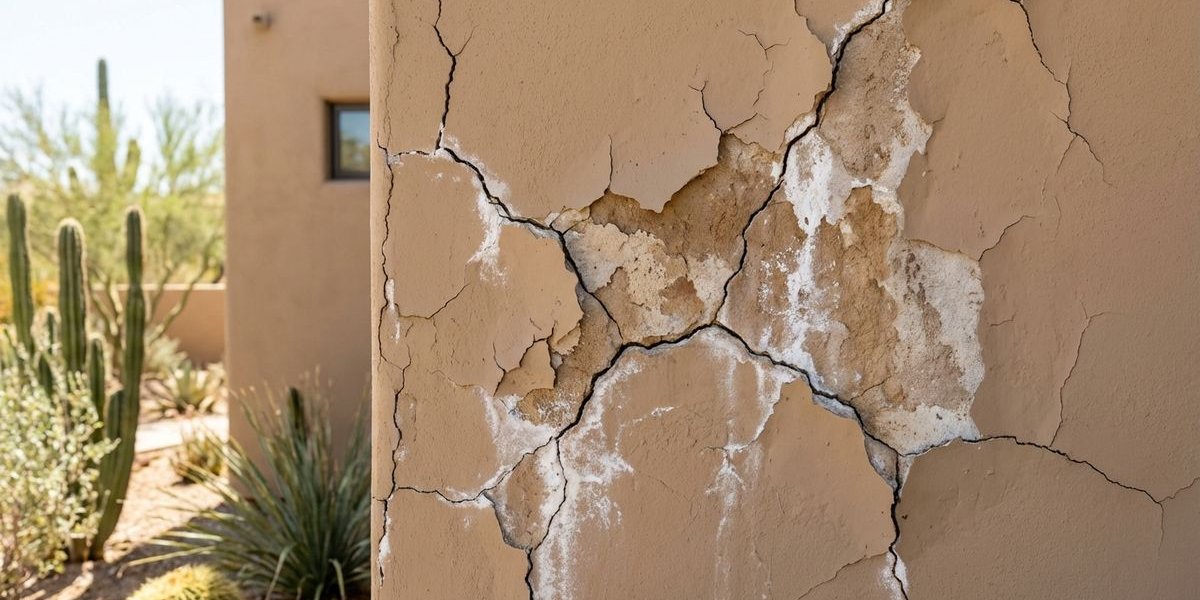
- Fine hairline cracks (alligatoring)
- Larger cracks following stucco joints
- Flakes of paint on the ground near walls
Cracking happens when paint becomes brittle and can’t flex with temperature changes. Once cracking starts, it accelerates quickly as moisture enters the gaps.
5. Stucco Damage Showing Through
If you can see:
- Dark spots or discoloration
- Stucco cracks visible through paint
- Texture irregularities
- Green or black mold/mildew growth
The paint is no longer sealing and protecting your stucco. Moisture is getting in and causing damage that will only worsen.
6. Wood Rot on Trim
Check your:
- Window frames
- Door frames
- Fascia boards
- Garage door trim
Soft, spongy, or discolored wood indicates rot. In Arizona, wood rot usually means paint failed, allowing moisture into the wood. Catching this early can save expensive carpentry repairs.
Test it: Press firmly with a screwdriver. Rotted wood will give easily.
7. Caulking Failure
Inspect where:
- Trim meets stucco
- Around windows and doors
- At corner joints
Cracked, separated, or missing caulk allows water behind paint, leading to premature failure and potential water damage inside your walls.
How Long Should Exterior Paint Last?
In Arizona, expect:
| Paint Quality | Typical Lifespan |
|---|---|
| Economy paint | 3-4 years |
| Standard paint | 5-7 years |
| Premium UV-resistant | 7-10 years |
If your paint is failing before these benchmarks, there may have been issues with preparation, application, or product selection.
What Happens If You Wait Too Long?
Delaying exterior painting when signs appear can lead to:
- Stucco damage - Water penetrates, causing cracks to expand
- Wood rot - Trim and fascia deteriorate, requiring replacement
- Higher costs - Extensive prep and repairs increase painting costs
- Interior damage - Water intrusion can reach inside walls
- Pest entry - Gaps and deterioration invite insects
Take Action Now
If you’re seeing any of these warning signs, don’t wait until small problems become expensive repairs. Contact us for a free exterior assessment. We’ll evaluate your home’s condition and provide honest recommendations—whether you need to paint now, can wait a season, or just need spot repairs.
John Claude Painting Team
Published December 8, 2025