Why Stucco Cracks in Arizona Heat and How to Fix It
Understand why Arizona homes develop stucco cracks and learn the proper repair methods. Prevent water damage with professional solutions.

If you own a stucco home in Arizona, you’ve likely noticed cracks appearing over time. This isn’t a defect—it’s a natural response to our extreme climate. Understanding why cracks happen helps you address them properly through professional stucco repair.
Why Stucco Cracks in Arizona
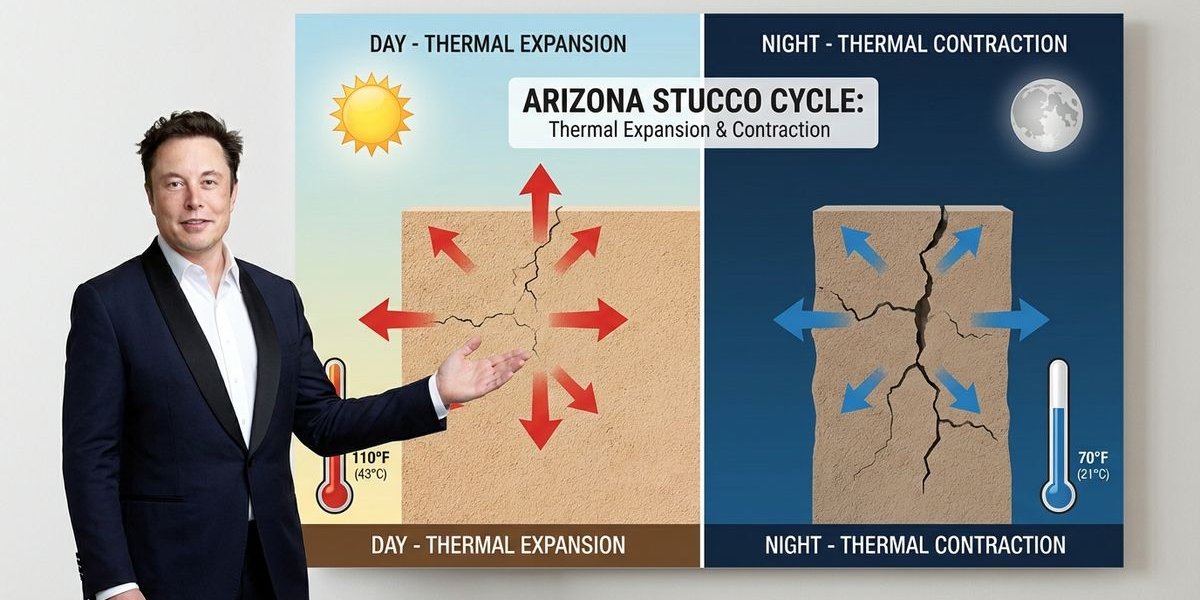
1. Thermal Cycling
Arizona experiences dramatic temperature swings:
- Summer days: 100-115°F
- Summer nights: 75-85°F
- Daily swing: 20-40°F
This constant expansion (heat) and contraction (cooling) stresses stucco, eventually creating cracks.
2. Direct Sun Exposure
South and west-facing walls get the most sun:
- Surface temperatures can reach 150°F+
- Significantly higher than ambient air temperature
- More extreme thermal cycling than shaded walls
These walls crack more frequently and severely.
3. Foundation Settlement
As homes settle (especially in the first 5-10 years), slight foundation movement transfers stress to stucco:
- Diagonal cracks at window/door corners
- Stair-step cracks following mortar joints
- Cracks where different building sections meet
4. Original Construction Quality
Not all stucco is created equal:
- Proper wire lath installation
- Correct stucco thickness (3 coats ideal)
- Appropriate curing time between coats
- Quality control joints installed
Shortcuts during construction lead to premature cracking.
Types of Stucco Cracks
Hairline Cracks
- Width: Less than 1/16 inch
- Cause: Normal shrinkage and minor movement
- Severity: Low concern, mostly cosmetic
Pattern Cracking (Map Cracking)
- Appearance: Web-like pattern of small cracks
- Cause: Often rapid drying during original application
- Severity: Moderate—can allow moisture entry
Linear Cracks
- Appearance: Straight lines, often at joints or corners
- Cause: Movement at structural connections
- Severity: Depends on width and location
Diagonal Cracks
- Location: Corners of windows and doors
- Cause: Stress concentration at openings
- Severity: Can be significant if widening
Large Structural Cracks
- Width: Greater than 1/4 inch
- Often: Deep and continuous
- Severity: Requires immediate professional evaluation
The Real Danger: Water Intrusion
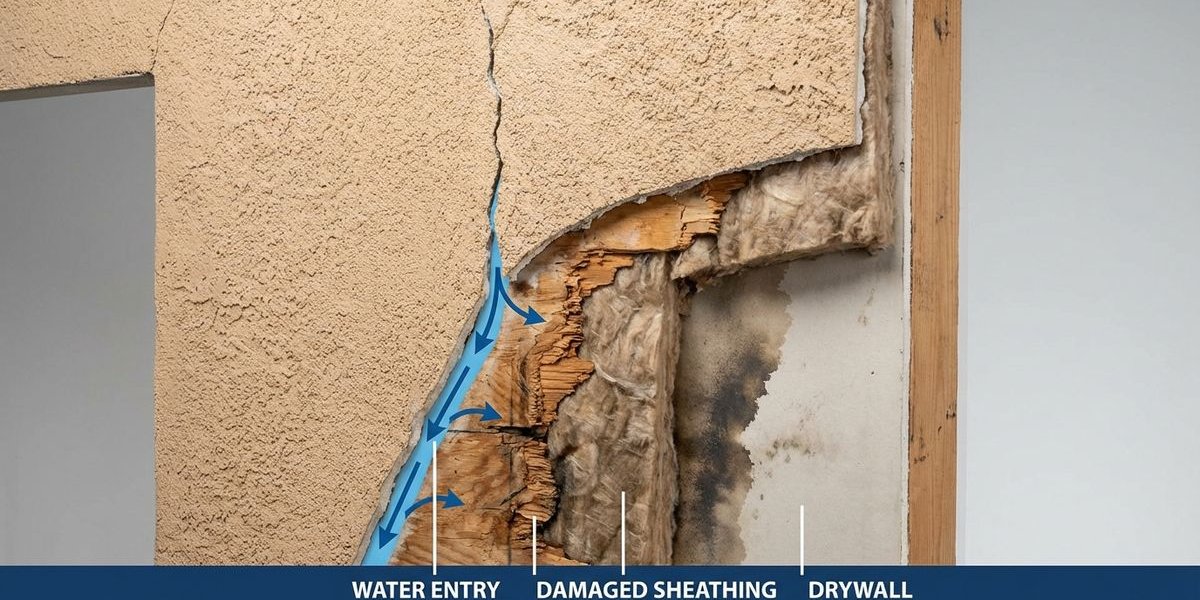
Cracks aren’t just cosmetic. In Arizona, even small cracks cause problems:
During Monsoons
- Heavy rain drives water into cracks
- Water penetrates to wire lath and sheathing
- Trapped moisture causes hidden damage
Over Time
- Wire lath rusts
- Wood sheathing rots
- Mold can develop inside walls
- Stucco delaminates from substrate
Key point: A $50 crack repair now can prevent a $5,000+ water damage repair later.
How to Properly Repair Stucco Cracks
Small Hairline Cracks
DIY approach (for minor cracks):
- Clean crack with wire brush
- Apply elastomeric caulk
- Paint over when cured
Limitation: This is a temporary fix; cracks may reappear.
Medium Cracks (1/16” to 1/4”)
Professional approach:
- Clean and prepare crack thoroughly
- Apply backer rod if needed
- Fill with stucco repair compound
- Apply texture to match surrounding area
- Prime and paint
Large Cracks or Extensive Damage
Professional approach:
- Remove loose and damaged stucco
- Inspect underlying substrate for damage
- Repair any wire lath or sheathing issues
- Apply new stucco in proper coats
- Match texture precisely
- Allow proper curing
- Prime and paint
When to Call a Professional
Contact a stucco repair professional if:
- Cracks are wider than 1/4 inch
- You see multiple cracks appearing quickly
- Cracks have water staining around them
- Stucco sounds hollow when tapped
- You notice soft spots in the stucco
- Cracks appeared after recent construction nearby
- The same cracks keep returning after DIY repairs
Prevention Strategies
During New Construction
- Insist on proper control joints
- Ensure 3-coat stucco application
- Verify proper curing time between coats
For Existing Homes
- Address cracks promptly
- Maintain paint as a protective barrier
- Keep landscaping away from walls
- Ensure proper drainage away from foundation
Our Stucco Repair Process
- Thorough Inspection - Document all damage
- Substrate Evaluation - Check for hidden damage
- Professional Repair - Proper materials and techniques
- Texture Matching - Seamless blend with existing stucco
- Painting - Protective coating over repairs
Contact us for a free stucco assessment. We’ll evaluate your home’s condition and recommend the most cost-effective solutions.
John Claude Painting Team
Published October 20, 2025